Portable Infrared Thermal Imaging Night Vision Scope Guide
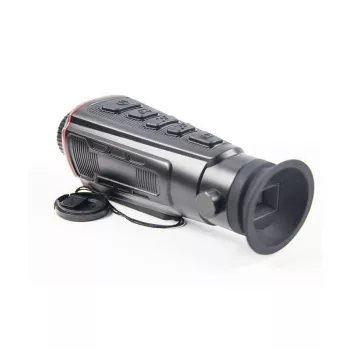
A portable infrared thermal imaging night vision scope can give you a different way to observe a dark scene. Instead of relying on visible light, it presents differences in infrared energy as an image. That can help you notice temperature contrasts that are difficult to distinguish with your eyes alone.
At Charism, we want you to choose equipment with a clear understanding of what it can and cannot do. Thermal viewing can be useful after dark, but a visible heat pattern is only a starting point for understanding what you are seeing.
What Thermal Imaging Helps You See
Objects emit infrared energy, and a thermal imager detects some of that energy to create a visual representation of temperature differences. Warmer and cooler areas may appear in contrasting shades or colors, depending on the display settings. For more background on this part of the electromagnetic spectrum, see NASA’s guide to infrared waves.
Conventional night vision takes a different approach: it uses available light or supplemental illumination to make a scene visible. The two technologies can reveal different information, so the better choice depends on what you want to observe and the conditions in which you will use it.
Thermal Imaging and Conventional Night Vision
| Consideration | Thermal imaging | Conventional night vision |
|---|---|---|
| Image basis | Differences in infrared energy | Available or supplemental light |
| Complete darkness | Does not require visible light | May require supplemental illumination |
| Recognizing detail | Depends on thermal contrast and equipment | Depends on lighting and equipment |
A thermal image does not necessarily show the colors, markings, or fine details you would see in daylight. It also cannot generally see through walls: the image typically reflects the temperature pattern on the wall’s surface.
Considerations for Nighttime Viewing
Thermal contrast matters as much as darkness. If an object and its surroundings are close in temperature, the object may be difficult to distinguish. A change in weather or time of day can alter that contrast, while rain, fog, and humidity can affect the image. Conditions that look promising on one outing may produce a less distinct view on another.
Distance also affects how much detail reaches the display. Trees, vegetation, buildings, and other obstructions can block your view, and a warm patch may have several possible causes. Detecting a heat difference is not the same as recognizing an object or positively identifying its source.
Observe responsibly wherever you use a scope. Respect other people’s privacy, stay where you have permission to be, and follow local rules for your activity. Do not make a safety-critical decision based on an uncertain thermal image alone.
Choosing a Portable Thermal Scope
Start with your intended use. Consider whether you will carry the scope for long periods, use it from a fixed position, or take it on occasional outings. Portability matters, but so do controls you can operate comfortably and a display that is clear enough for your needs.
Compare resolution, power requirements, operating time, and weather protection before you buy. Resolution can affect how much detail the equipment displays, while operating time helps you plan for charging or carrying an appropriate power supply. Match the stated weather protection to the conditions you expect rather than assuming that a portable device is waterproof.
Pay attention to range terminology, too. Detection generally means noticing that something is present; recognition means distinguishing its general type; and identification means determining more specific details. These are different capabilities, and an advertised detection range should not be treated as a promise of positive identification at the same distance.
Explore the Scope at Charism
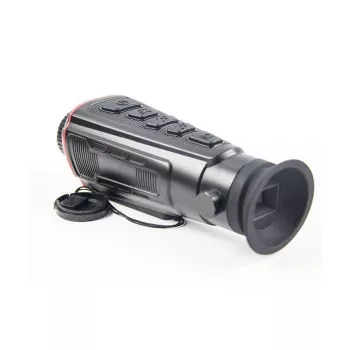
Our Portable Infrared Thermal Imaging Night Vision Scope is an option to explore if you want a portable thermal viewer. It is listed at $2,105.49 USD and is in stock. Price and availability may change, so review the current product details before ordering.
For a casual outfit on an outing, we also carry Levi’s Women’s Blue Jeans. Choose clothing appropriate for the weather and terrain; everyday clothing is not a substitute for protective gear when your activity calls for it.
Getting Ready to Use Your Scope
Before heading out, read the manufacturer’s instructions and check the power supply. Learn how to start the device, adjust the display, and handle any settings you expect to use. Allow enough time to become familiar with the controls before you need them in the dark.
Practice in a familiar area where you can compare the image with objects you already recognize. Notice how surfaces appear after exposure to sun or shade and how a scene changes as temperatures shift. This can help you interpret contrast without assuming every bright or dark shape has an obvious source.
Keep the lens clean using the manufacturer’s recommended method, and store the scope as directed. After use in challenging conditions, follow the care instructions before putting it away. Our team recommends keeping the instructions accessible so you can refer back to the device’s specific maintenance and power guidance.
FAQ
Can thermal imaging work in complete darkness?
Yes. Thermal imaging detects infrared energy rather than relying on visible light, although image quality depends on thermal contrast and the equipment.
Can a thermal scope see through walls?
No. A thermal scope generally shows the temperature pattern of a wall’s surface, not objects behind it.
What should I check before buying a thermal scope?
Compare your intended use with specifications such as resolution, range definitions, power requirements, portability, and weather protection.














Leave a comment